Your Suggestibility Style
Physical & Emotional Patterns
Not everyone hears the same words in the same way. Your mind has a preferred language for receiving suggestion — and discovering it changes everything.
Based on the Emotional and Physical suggestibility model developed by Dr. John G. Kappas, Ph.D. at the Hypnosis Motivation Institute.

Imagine two people sitting side by side, listening to the same sentence. One of them feels it immediately in their body. The other feels nothing until a story wraps around the words and gives them somewhere to land. Same sentence. Two completely different experiences. This is not a flaw. It is not a personality type. It is simply how your mind prefers to receive information. And understanding it is one of the most important things we will do together.

In 1968, Dr. John G. Kappas realized something that changed hypnotherapy forever. He noticed that some people responded beautifully to direct, literal suggestions, while others seemed to resist them entirely. The difference was not willingness. It was not intelligence. It was suggestibility — the way each person naturally learns, communicates, and processes the world around them. He developed a model to understand this, and it opened hypnosis to everyone.

If you are physically suggestible, you respond to direct, literal language. When I say, "Your hand is becoming heavy," you feel heaviness. When I say, "You are becoming deeply relaxed," your body responds directly to the words. The pathway runs through the body first. You take information at face value. You tend to be straightforward in how you communicate, and you learned early in life from a caregiver who said what they meant and meant what they said.

If you are emotionally suggestible, you respond to inference, metaphor, and imagery. Direct commands may bounce off you, but a story, a feeling, an evocative image — these find their way in. If I say, "Imagine the weight of five heavy wool blankets pressing gently down on the back of your hand," you feel the heaviness not from the instruction but from the picture it creates. The pathway runs through feeling first. You listen for the meaning behind the words.
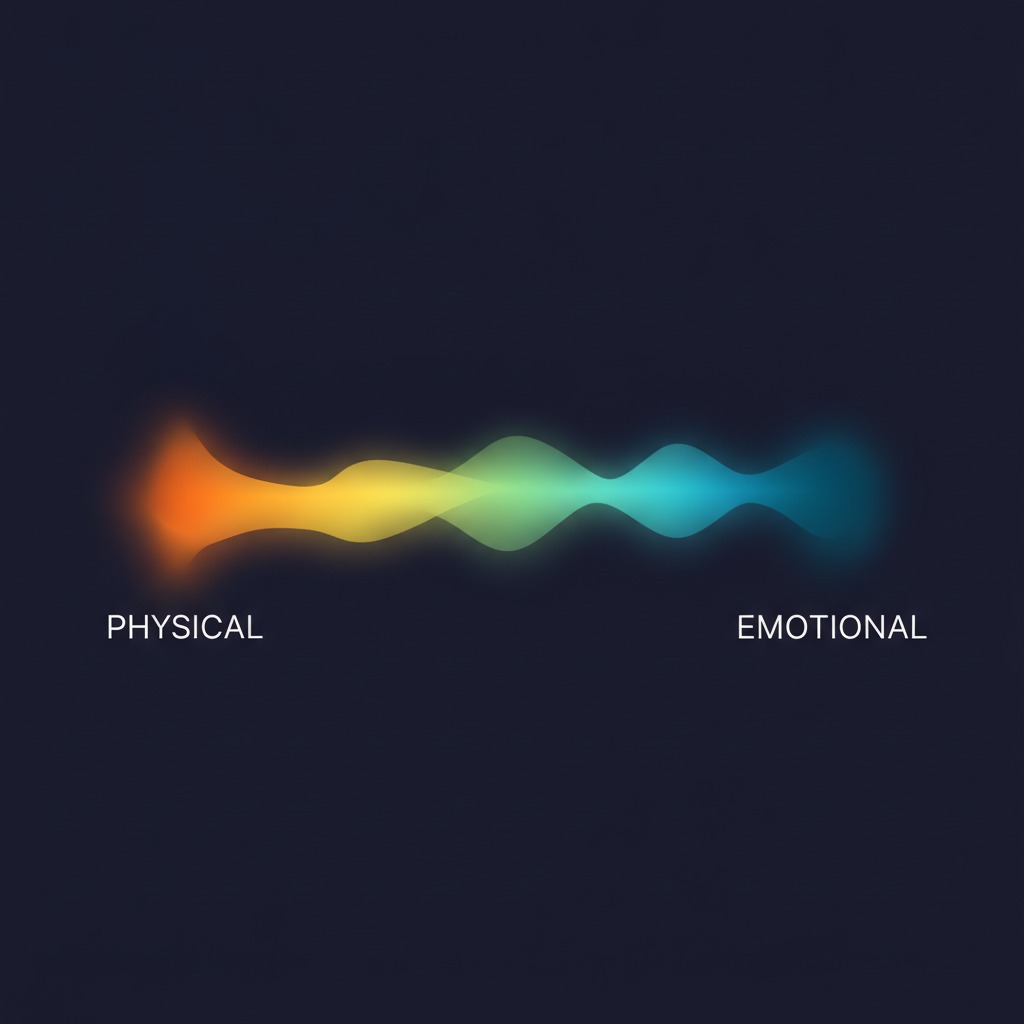
Most people are not entirely one or the other. You are a blend — perhaps seventy percent physical and thirty percent emotional, or sixty percent emotional and forty percent physical. The balance is unique to you, shaped by your earliest experiences with the people who raised you. If your primary caregiver did what they said and meant what they said, you likely lean physical. If their words and actions sometimes told different stories, you likely learned to read between the lines — and you lean emotional.

This is why the same script does not work for every person. A suggestion crafted for a physical suggestible may feel hollow to an emotional suggestible. A metaphor designed for an emotional suggestible may confuse a physical one. The practitioner who understands your pattern does not force you to fit a formula. They shape every suggestion, every image, every word around the way your mind naturally opens. We do not bend you around the tool. We bend the tool around you.

There are two special patterns worth knowing. If you score fifty percent physical and fifty percent emotional, you are a somnambulist — someone who responds to both pathways equally and often enters hypnosis quickly and deeply. If you score eighty percent emotional or higher, you are an intellectual suggestible — highly analytical, deeply perceptive, and most comfortable when you understand the process before you let go into it. Neither is better. Both are beautiful. All patterns are information, and all information makes the work more precise.

In your first session, we spend time discovering your pattern. There are simple exercises — a finger-spreading test, a brief questionnaire, observations about how you respond to different kinds of language. These are not exams. You cannot pass or fail. They are not about measuring you. They are about understanding you. The information they reveal allows me to speak your mind’s native language from the very first suggestion.

There is something deeply reassuring about being in a session where every word has been chosen for you. Not a generic script read from a page, but language shaped to the way you actually think, feel, and process. Physical suggestibles receive clear, direct, confident suggestions. Emotional suggestibles receive rich imagery, gentle stories, and space for their imagination to do the work. And the result is the same: the subconscious receives the message, because it was delivered in the right language.

Your suggestibility pattern has been with you your whole life. It shaped how you learned in school, how you connect in relationships, how you respond to the world. Understanding it does not change who you are. It reveals how you work best. And when we know how you work best, the change you are seeking becomes not just possible — but natural. Your pattern is waiting to be discovered. And when it is, the work we do together will feel like it was designed for you. Because it was.
Take the Free Assessment
Take our personalized assessment right here, or explore the original HMI versions. All are free, private, and there are no wrong answers.
36 yes/no questions · ~5 minutes. Get your personalized E&P profile with an explanation of what it means for your sessions.
Take Your Assessment →36 yes/no questions · ~5 minutes. Discover whether you respond best to direct literal suggestions or inferred, imaginative ones.
Take the free test →Based on Dr. Kappas’s model of how your subconscious patterns shape who you attract and how you connect in relationships.
Take the free test →HMI assessments are provided by the Hypnosis Motivation Institute (hypnosis.edu). The VRishi assessment uses the same E&P model with personalized session guidance.
Your mind has a preferred language. In your first session, we discover it together. And from that moment forward, every suggestion is written in your native tongue.
← Back to all guidesThe Emotional and Physical suggestibility model was developed by Dr. John G. Kappas, Ph.D. at the Hypnosis Motivation Institute. This is educational content about a self-improvement framework, not a medical or psychological assessment.